NFC Tags vs Virtual Checkpoints: The True Cost of Guard Tour Systems
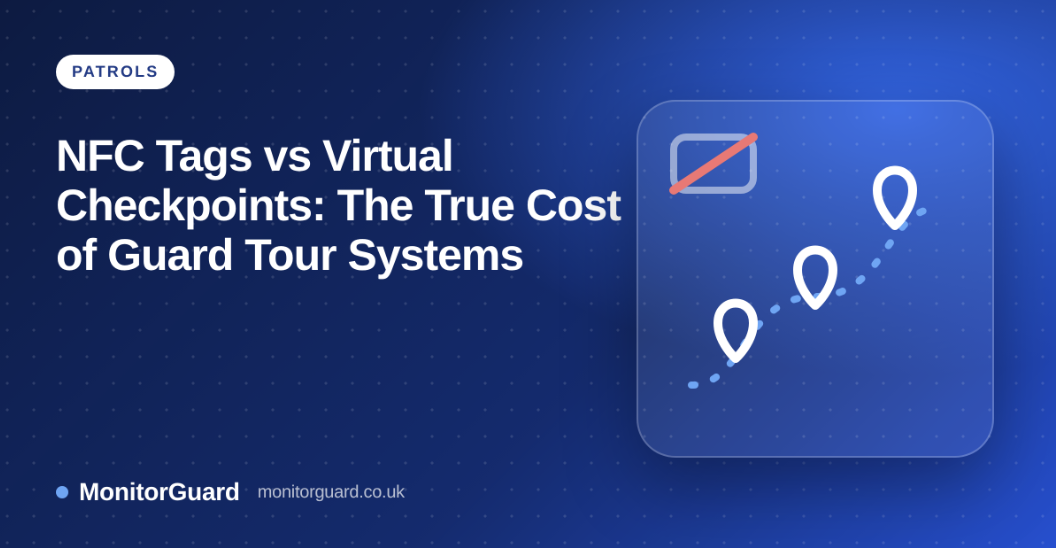
A guard tour system proves a patrol happened by recording checkpoints. NFC tags do this with physical hardware fitted at the site, while virtual checkpoints do it in software with nothing to install. For most security companies, virtual checkpoints cost less to run and are easier to manage, while NFC tags still suit a few specific cases.
How NFC tag guard tours work
Small NFC tags are fixed at checkpoints around a site. A guard taps each one with a phone or reader, which records the time. The patrol record is built from those taps.
How virtual checkpoints work
Checkpoints are set up in the software for each site. The guard completes the patrol and each checkpoint is logged, with the time and location, without any tag on the wall. Managers and clients can see the record straight away.
The hidden costs of NFC tags
- Purchase and fitting. Tags must be bought, then fitted at every site by someone.
- Replacement. Tags get lost, damaged, painted over or removed, and each one needs replacing.
- Site changes. When a client changes layout or you start a new contract, you repeat the fitting.
- Access time. Getting tags to remote or multi-site contracts takes staff time.
- Gaps in the record. A missing tag can mean a missing patrol point.
- Compatibility. Staff need a device that can read the tags.
Build your own cost comparison by listing the number of tags, their price, the time to fit and the replacement rate across your sites. Use your own figures rather than industry averages.
NFC tags vs virtual checkpoints
|
|
NFC tags |
Virtual checkpoints |
|---|---|---|
|
Hardware at site |
Yes |
None |
|
Set up for a new site |
Order and fit tags |
Add checkpoints in software |
|
Replacing lost or damaged items |
Yes |
Not needed |
|
Works for staff on their own phone |
Needs NFC-capable device |
Works in the browser |
|
Visible to the client |
If reported |
Yes, logged and visible |
|
Best for |
Sites that need a fixed physical touch point |
Most security contracts |
When NFC tags still make sense
Some clients specify physical checkpoints in the contract. Some sites need proof of touching a specific object. In those cases, tags can be a requirement. Check what your contract asks for before choosing.
Patrols with MonitorGuard
MonitorGuard uses virtual checkpoints, so there is nothing to buy, fit or replace. Staff use the web app on their phone with a PIN and password, every patrol is logged, and clients can see that the patrols they pay for are happening.
Frequently asked questions
Do I need NFC tags for guard tours?
Not always. Virtual checkpoints record patrols in software. Use tags only if your contract requires a physical touch point.
Are virtual checkpoints reliable?
They are as reliable as the location and time data behind them. Check how any system verifies a guard is at the checkpoint.
What does a guard tour system cost?
It depends on the supplier and the number of sites. Include hardware, fitting, replacement and staff time in any comparison, not just the software price.
Final thoughts
When you add up tags, fitting and replacement, hardware often costs more than it first appears. Software-only patrols are simpler to run.
Want patrols without tags? Book a MonitorGuard demo or start a free 30-day pilot.