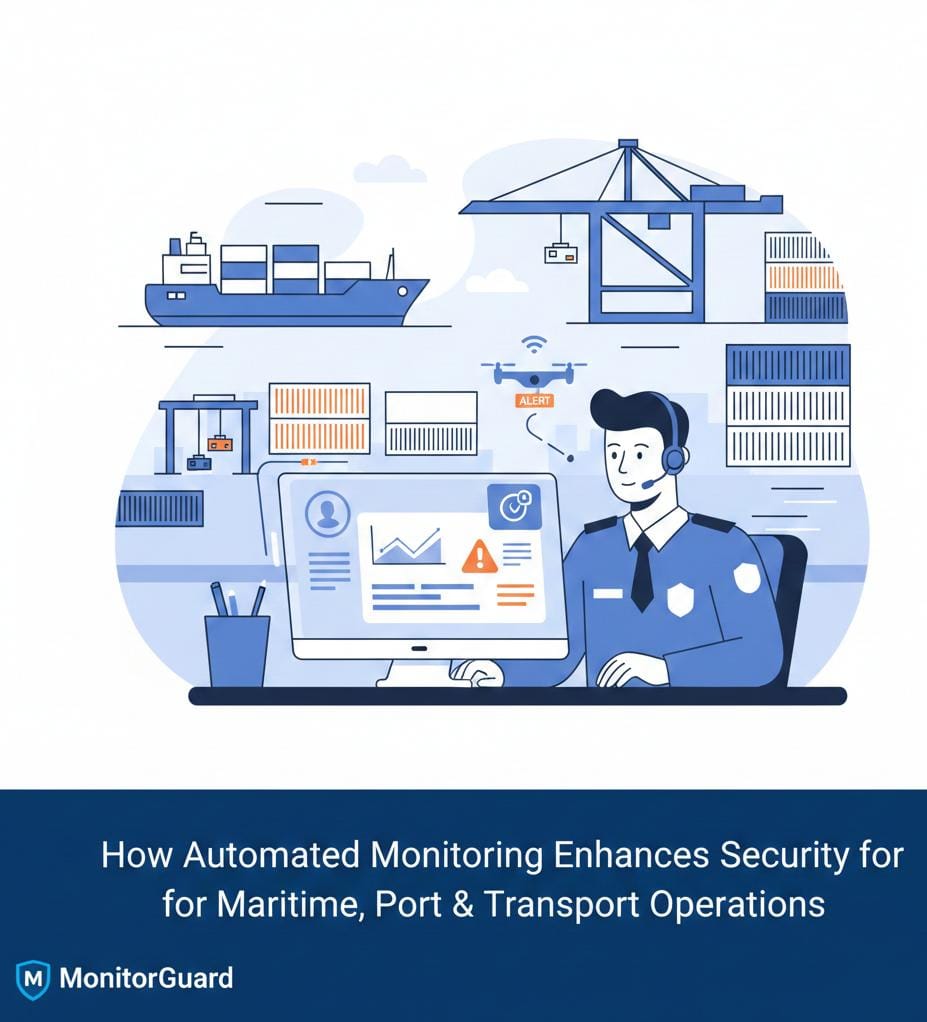
Automated Security Monitoring for Ports & Maritime Operations
Ports, shipping terminals, airports and freight hubs never really switch off. Containers move at 3am, contractors come and go, and a single missed gate check can turn into a stolen load, a regulatory headache or a delayed vessel.
For years, the answer was more guards and more patrols. That still matters, but on its own it no longer keeps up with how large and fast these sites have become. This is where automated security monitoring earns its place.
The security problems port and transport operators actually face
Maritime and transport sites carry risks that a typical office or warehouse never sees:
- Unauthorised access to cargo yards, quaysides and restricted zones
- Theft, smuggling and vandalism, often targeting high-value or sensitive freight
- Piracy and maritime threats for vessels and offshore operations
- Overlapping local and international compliance rules
- Round-the-clock schedules where delays are expensive
The common thread is scale. A terminal can span hundreds of acres, and the people protecting it are spread thin.
Where traditional security falls short
Problems are found late. Manual patrols and basic alarms often tell you about an incident after it has happened, when the loss has already occurred.
Coverage has gaps. Even the best guard gets tired, and on large multi-site operations, a missed checkpoint or a poor handover is easy to overlook.
It doesn't scale cheaply. Adding people to cover every terminal, warehouse and gate pushes costs up fast.
There's little data to learn from. Paper logs and disconnected systems make it hard to spot patterns, such as which gate has the most late checks or where incidents keep repeating.
What automated monitoring changes
Automated monitoring doesn't replace your security team. It gives them better information and removes the paperwork that slows them down. With a platform like MonitorGuard, operators can:
- Verify patrols with a guard tour system using QR and NFC checkpoints, so you know a round actually happened
- Protect staff working alone on remote quaysides or night shifts with lone worker safety check-ins
- Capture problems on the spot through incident reporting from a phone, with photos and timestamps
- Keep training, licences and certifications in order with compliance tracking
- Track and assign equipment with asset management
- See every site from one dashboard instead of chasing updates by phone and email
The practical result is a shift from reacting to incidents toward spotting trouble early, such as a missed checkpoint or an unanswered check-in, before it becomes a loss.
Benefits for ports, terminals and transport hubs
Safer people and cargo. Faster alerts mean faster response, whether it's a breach or a lone worker who has stopped responding.
Fewer disruptions. Quick action keeps a security issue from becoming a delayed shipment.
Easier multi-site management. Supervisors get one clear view across terminals, warehouses and depots.
Audit-ready records. Digital logs with timestamps make regulatory audits and client reviews far less painful.
Smarter spending. Better coverage with the same team often beats simply adding headcount. If your clients want proof of service, a client portal lets them see it directly.
Quick checklist before you choose a monitoring system
- Does it work on the devices your officers already carry?
- Can it handle multiple sites and shift patterns?
- Are reports and logs exportable for audits?
- Does it cover incidents, patrols and lone worker safety in one place?
If you're comparing options, our guide on 12 questions to ask before buying workforce management software is a useful starting point. You can also see how security companies use MonitorGuard and how it helps reduce risk across operations.
Frequently asked questions
What is automated security monitoring? It's the use of software and mobile tools to track patrols, check-ins, incidents and compliance automatically, instead of relying on paper logs and manual reporting.
Can it replace security guards at a port? No. It supports them. Guards still do the physical work, while the system verifies it, flags missed checks and removes admin.
Is it suitable for multi-site operations? Yes. Centralised dashboards are built for managing several terminals, depots or warehouses at once.
How does it help with compliance? Every patrol, incident and certification is logged digitally with time and date, which makes audits faster and records harder to dispute.
Final thoughts
Ports and transport hubs can't depend on manual patrols alone anymore. Automated monitoring gives security teams the visibility, proof and speed that large, busy sites need, while keeping costs under control.
Want to see it in practice? Try MonitorGuard free for 30 days or book a demo.