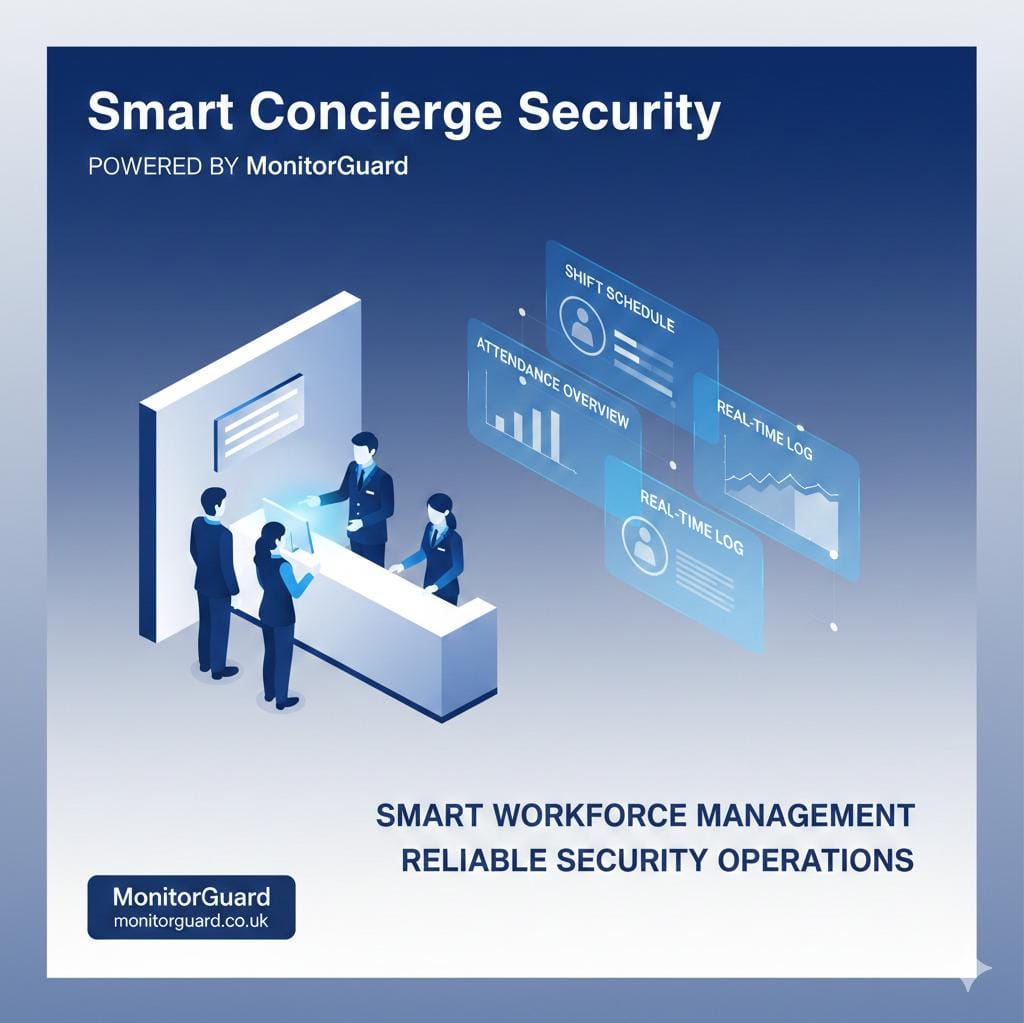
Smart Concierge Security: The Complete Guide for Modern Buildings
Smart Concierge Security is changing how residential towers, offices and gated communities protect people and property. Instead of relying only on a front-desk guard and a paper logbook, buildings now use connected technology that verifies visitors, controls access and records every event automatically.
If you manage a property, this guide explains what smart concierge security is, how it works, what it costs you in effort, and how to choose the right system.
Quick Answer: What Is Smart Concierge Security?
Smart Concierge Security is a technology-driven system that combines digital visitor management, access control, video surveillance and real-time alerts to secure a building’s entry points, with or without an on-site concierge. It replaces manual check-ins with verified, traceable and automated processes, which reduces human error and improves response time.
How Smart Concierge Security Works
A smart concierge system links several tools through one central platform. The typical flow looks like this:
- Pre-registration: A resident or employee invites a guest through a mobile app. The guest receives a QR code or digital pass.
- Arrival and verification: At the lobby, the guest scans the code at a kiosk or gate. Some systems also verify ID or capture a photo.
- Notification: The host gets an instant alert on their phone and can approve or deny entry.
- Access: If approved, the system unlocks the relevant door, elevator or floor for a limited time.
- Logging: Every entry and exit is stored in a searchable digital record.
- Monitoring: Security teams view live events, alerts and camera feeds from a dashboard.
This replaces slow manual steps with a process that takes seconds and leaves a clear audit trail.
Core Features of Smart Concierge Security
Digital Visitor Management
Guests are registered, verified and tracked electronically. This removes handwritten logs, which are easy to falsify and hard to search. Related reading: Visitor Management System Guide.
Smart Access Control
Mobile credentials, key cards, PIN codes or biometrics decide who can enter which areas and when. Permissions can be changed remotely, so a lost card is disabled in moments. See also: Access Control Systems Explained.
Video Surveillance Integration
Cameras at entrances, lobbies and parking areas connect to the same platform. Events such as a denied entry can be linked to the matching video clip for quick review. Learn more: CCTV and Video Analytics for Buildings.
Package and Delivery Management
Couriers can be verified, parcels logged and recipients notified. This reduces theft and disputes over missing deliveries.
Real-Time Alerts and Reporting
Forced doors, tailgating, expired passes and unusual activity trigger instant notifications. Dashboards show trends, such as peak visitor times and frequent denied entries.
Remote Concierge Services
Some providers offer a live remote operator who greets visitors by video, checks credentials and unlocks doors. This gives staffed-style service at a lower cost.
Benefits of Smart Concierge Security
Stronger security. Every visitor is verified and recorded. Time-limited passes mean access ends when it should.
Faster, smoother entry. Pre-registered guests skip long queues, which improves the experience in busy office lobbies and apartment buildings.
Lower operating costs. Automation reduces the number of staff needed per shift. Remote concierge options can cover night hours without a full on-site team.
Better accountability. Digital logs show who entered, when, and who approved them. This is valuable during incident investigations and insurance claims.
Improved resident and tenant satisfaction. People feel safer when they control guest access from their own phones.
Data for better decisions. Reports reveal patterns that help managers adjust staffing, schedules and security policies.
Smart Concierge Security vs. Traditional Security
| Factor | Traditional Guard Desk | Smart Concierge Security |
|---|---|---|
| Visitor records | Paper logbook | Searchable digital log |
| Verification | Visual check | QR, ID scan, host approval |
| Availability | Limited by shifts | 24/7 with automation or remote staff |
| Response to incidents | Manual | Instant alerts |
| Reporting | Minimal | Real-time dashboards |
| Scalability | Requires more staff | Add sites through software |
The best results often come from a hybrid model: skilled security staff supported by smart technology. Technology handles repetitive checks, while people handle judgment and emergencies.
Who Needs Smart Concierge Security?
- Residential towers and apartment complexes: Control guest, delivery and contractor access.
- Gated communities: Manage resident vehicles, visitors and service providers.
- Corporate offices: Protect sensitive areas and streamline employee and guest entry.
- Co-working spaces: Handle high visitor volume and flexible memberships.
- Hospitals and clinics: Limit access to restricted zones while keeping entry efficient.
- Schools and universities: Verify visitors and secure campus entrances.
- Hotels and serviced apartments: Combine guest experience with secure access.
For sector-specific advice, see our guide on Apartment Building Security Best Practices.
How to Choose the Right Smart Concierge Security System
Before buying, evaluate these factors:
1. Security needs. List your entry points, risk areas and the number of daily visitors. A small office and a 40-floor tower have very different requirements.
2. Integration. Confirm the system works with your existing cameras, door locks, elevators and intercoms. Open integrations protect your investment.
3. User experience. The app and kiosk should be simple for residents, guests and staff. A confusing interface leads to workarounds that weaken security.
4. Scalability. Choose a platform that can add users, doors and locations without replacing everything.
5. Reliability. Check uptime guarantees, offline modes and backup power. Doors should behave safely during internet or power failures.
6. Data protection. Ask where data is stored, how it is encrypted, and how long visitor records are kept. Make sure the vendor supports local privacy laws.
7. Support and training. Reliable installation, staff training and responsive support matter as much as the hardware.
8. Total cost. Compare hardware, software subscriptions, installation and maintenance, not just the initial price.
Also read: Smart Building Security Checklist.
Implementation Steps
- Run a security audit. Identify weaknesses in current entry procedures.
- Define policies. Decide who can enter, when, and how exceptions are handled.
- Select a vendor. Request demos and references from similar properties.
- Pilot first. Start with one entrance or floor and collect feedback.
- Train everyone. Teach staff, residents and tenants how to use the system.
- Roll out in phases. Expand gradually to avoid disruption.
- Review regularly. Use reports to refine rules and fix recurring issues.
Privacy and Compliance
Smart concierge systems collect personal information such as names, photos and entry times. Handle it responsibly:
- Collect only what you need.
- Tell visitors how their data is used, with clear signage or app notices.
- Encrypt data in transit and at rest.
- Limit staff access to records.
- Set a retention period and delete old data.
Good privacy practice builds trust and reduces legal risk. For more, see Data Privacy in Smart Security.
Common Mistakes to Avoid
- Buying on price alone. Cheap systems may lack integrations or support.
- Skipping training. Even the best system fails if people avoid using it.
- Ignoring backup plans. Plan for power cuts, network failures and lost devices.
- Over-collecting data. More data means more responsibility and risk.
- Treating it as set and forget. Update software and review permissions regularly.
The Future of Smart Concierge Security
The industry is moving toward mobile-first credentials, AI-based video analytics, facial recognition where legally permitted, and deeper integration with building management systems. Cloud platforms will let operators manage several properties from one dashboard. As buildings become smarter, security will become more proactive, spotting unusual patterns before they become incidents.
Explore more trends in The Future of Smart Building Technology.
Frequently Asked Questions
What is Smart Concierge Security in simple terms?
It is a digital system that manages visitors, controls door access and monitors a building’s entrances using apps, cameras and automated alerts.
Does smart concierge security replace security guards?
Not always. It reduces repetitive manual tasks, but many properties keep guards for patrols, emergencies and personal assistance. A hybrid model is common.
Is smart concierge security suitable for small buildings?
Yes. Cloud-based systems scale down well, and small buildings can start with visitor management and mobile access, then add features later.
How much does smart concierge security cost?
Cost depends on the number of doors, users, hardware and software features. Most systems combine upfront equipment costs with a monthly or annual software fee. Ask vendors for a full multi-year quote.
Is visitor data safe in a smart concierge system?
It can be, if the vendor uses encryption, role-based access and clear retention policies. Always review the provider’s security and privacy practices.
Can it work without internet?
Quality systems include offline or fallback modes for essential functions, such as local door control. Confirm this before buying.
How long does installation take?
A small site may take a few days, while large multi-entrance properties can take several weeks, depending on integrations and training needs.
Conclusion
Smart Concierge Security gives modern buildings a faster, safer and more accountable way to manage entry. By combining visitor management, access control, surveillance and real-time reporting, it protects people while improving the experience for residents, tenants and guests.
Start by auditing your current entry process, define your requirements, and pilot a solution before full rollout. Ready to go deeper? Read our Smart Building Security Checklist or contact our team for a security consultation.