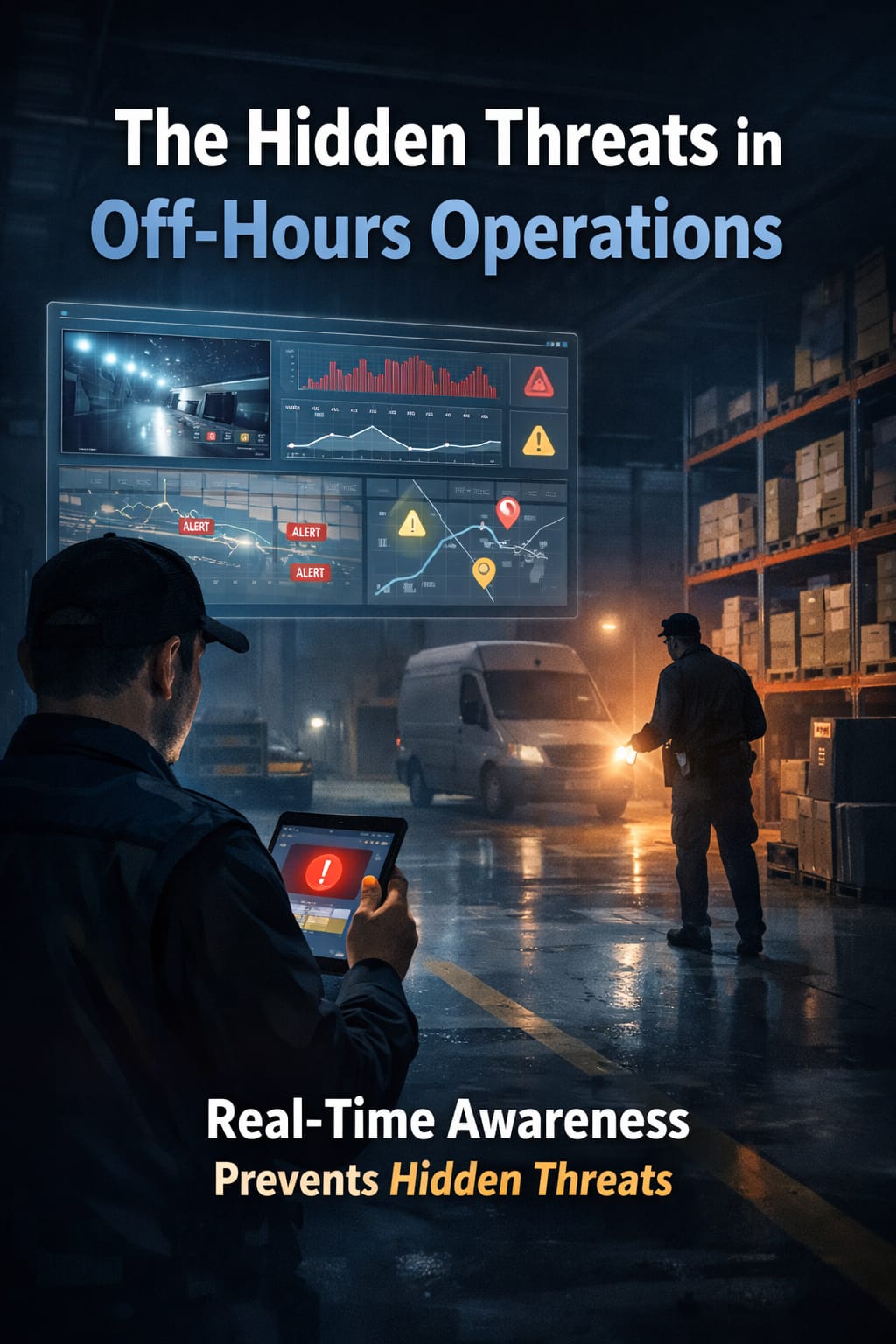
Off-Hours Security Risks: The Threats You Can’t See
Most facilities assume that if the site is quiet, everything is safe. However, off-hours operations - nights, weekends, or low-staff periods - often hide the riskiest moments. From unnoticed equipment failures to unauthorized access, these “silent hours” can expose businesses to serious operational, financial, and safety risks.
Managing these periods requires awareness, proper systems, and actionable data to prevent small issues from escalating.
1. Why Off-Hours Are Vulnerable
- Low Staffing Levels: Fewer guards or staff mean less observation and slower response to incidents.
- Reduced Oversight: Managers and supervisors are usually off-site, delaying decision-making.
- Complacency Risks: Quiet hours can create a false sense of security. Staff may assume “nothing is happening,” but the reality is different.
- Unmonitored Areas: Some areas may not be routinely checked, leaving blind spots in security coverage.
2. Common Hidden Threats
- Unauthorized Access: Off-hours entry attempts can go unnoticed without real-time monitoring.
- Equipment Failures: Malfunctions or system errors are less likely to be detected immediately.
- Delayed Incident Reporting: Manual patrol logs and late reporting allow small issues to escalate.
- Environmental Risks: Temperature-sensitive equipment, chemical storage, or sensitive data centers require constant monitoring.
- Minor Incidents Snowball: Small overlooked events can lead to larger operational or financial problems over time.
3. Why Traditional Security Methods Fail
- Paper Logs & Manual Checks: Gaps in reporting, errors, and delays are common.
- Siloed Systems: Cameras, alarms, or sensors often operate independently without integrated reporting.
- Human Limitations: Guards can’t observe everything simultaneously; mistakes happen, especially during off-hours.
- Reactive Approach: Many facilities act only after incidents occur, which can be costly.
4. How Real-Time Monitoring Solves the Problem
This is where MonitorGuard comes into play:
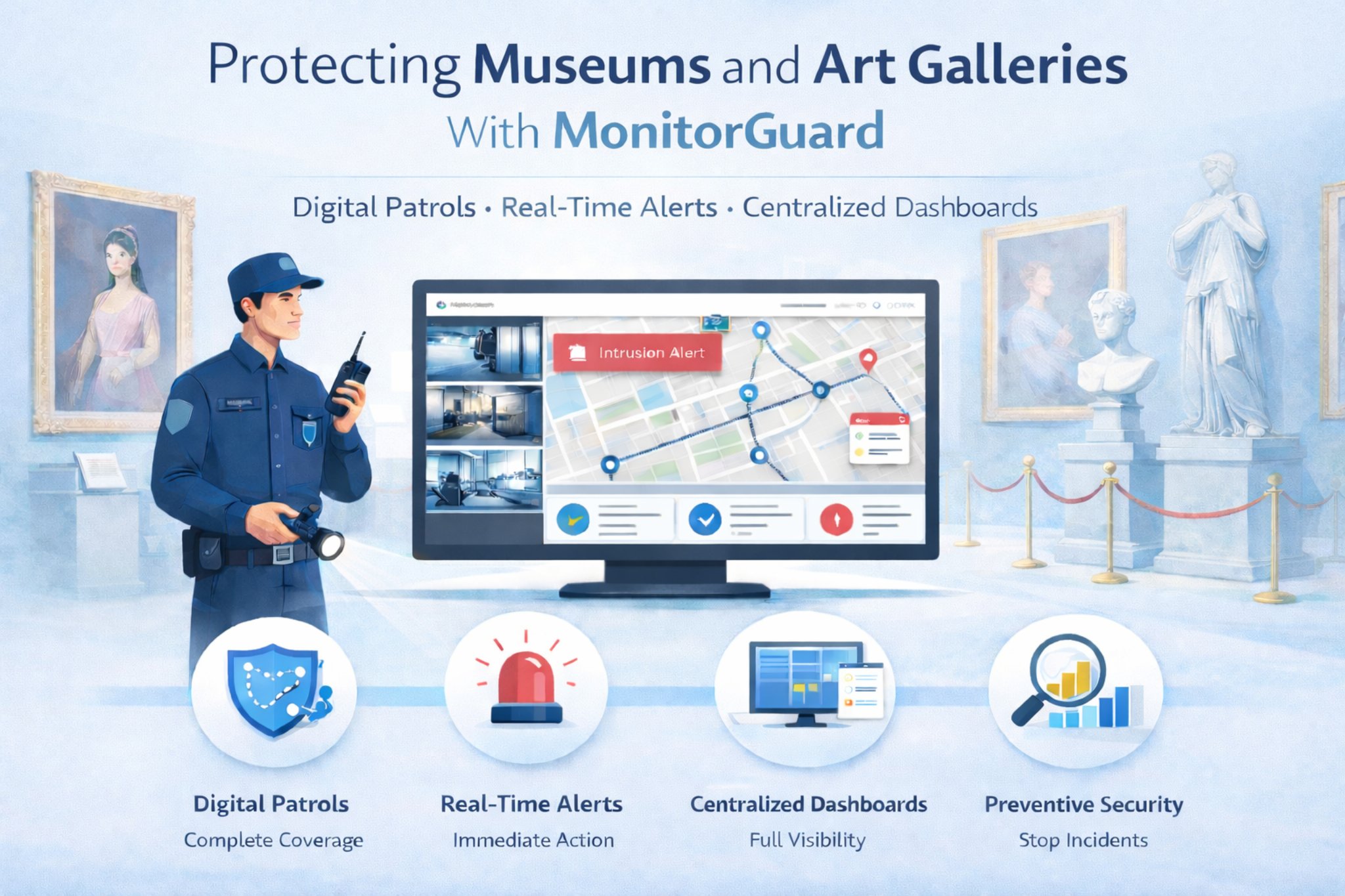
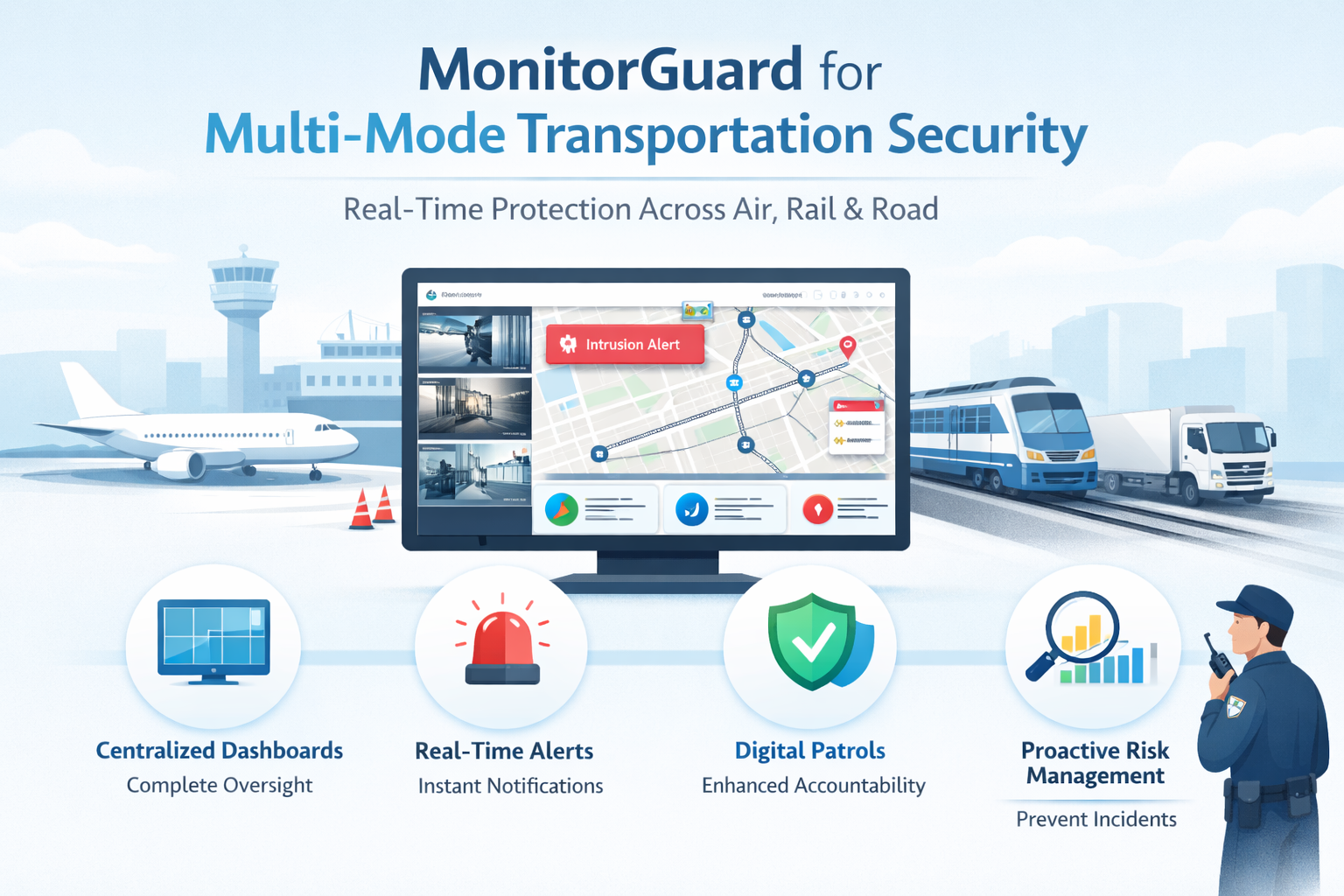
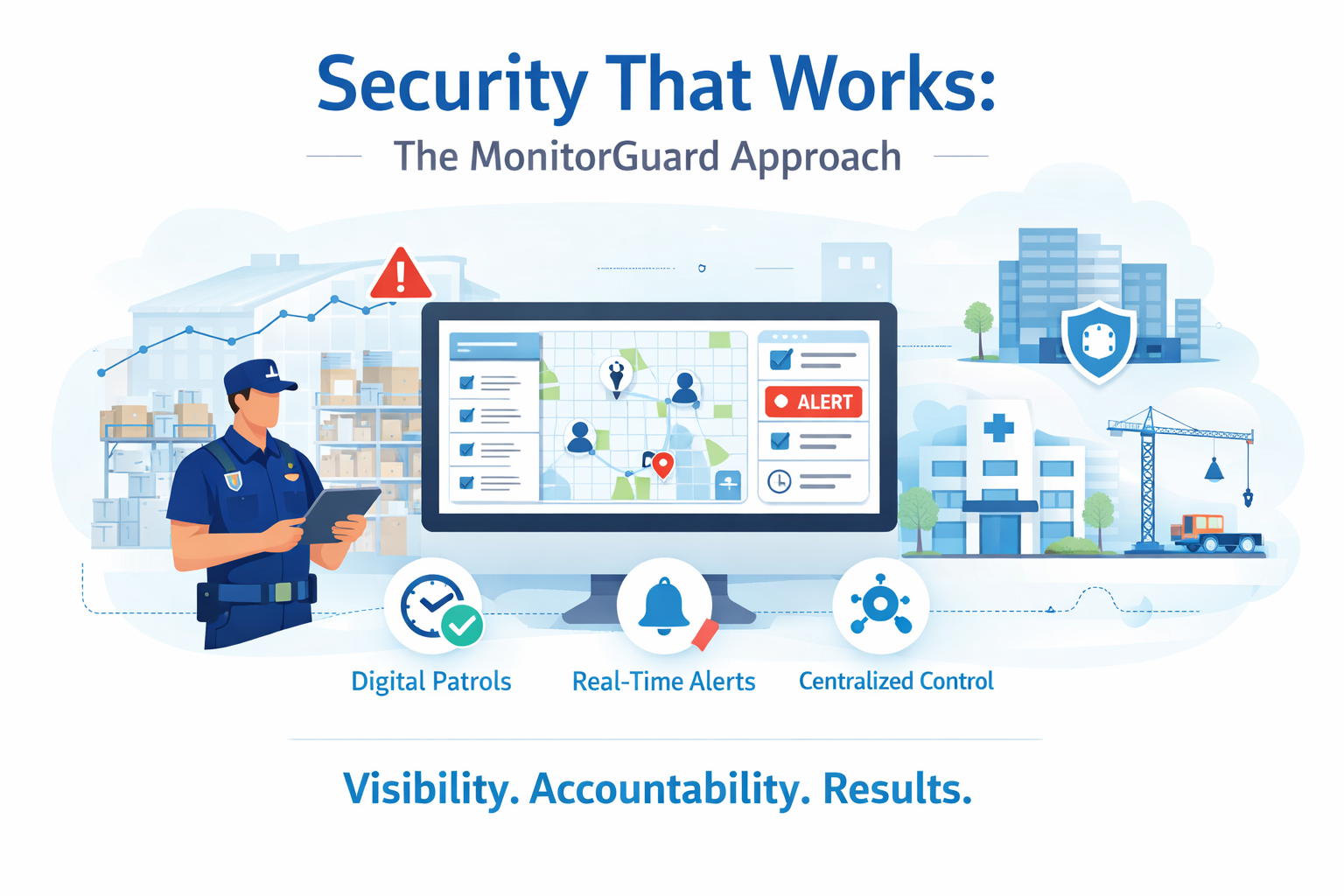
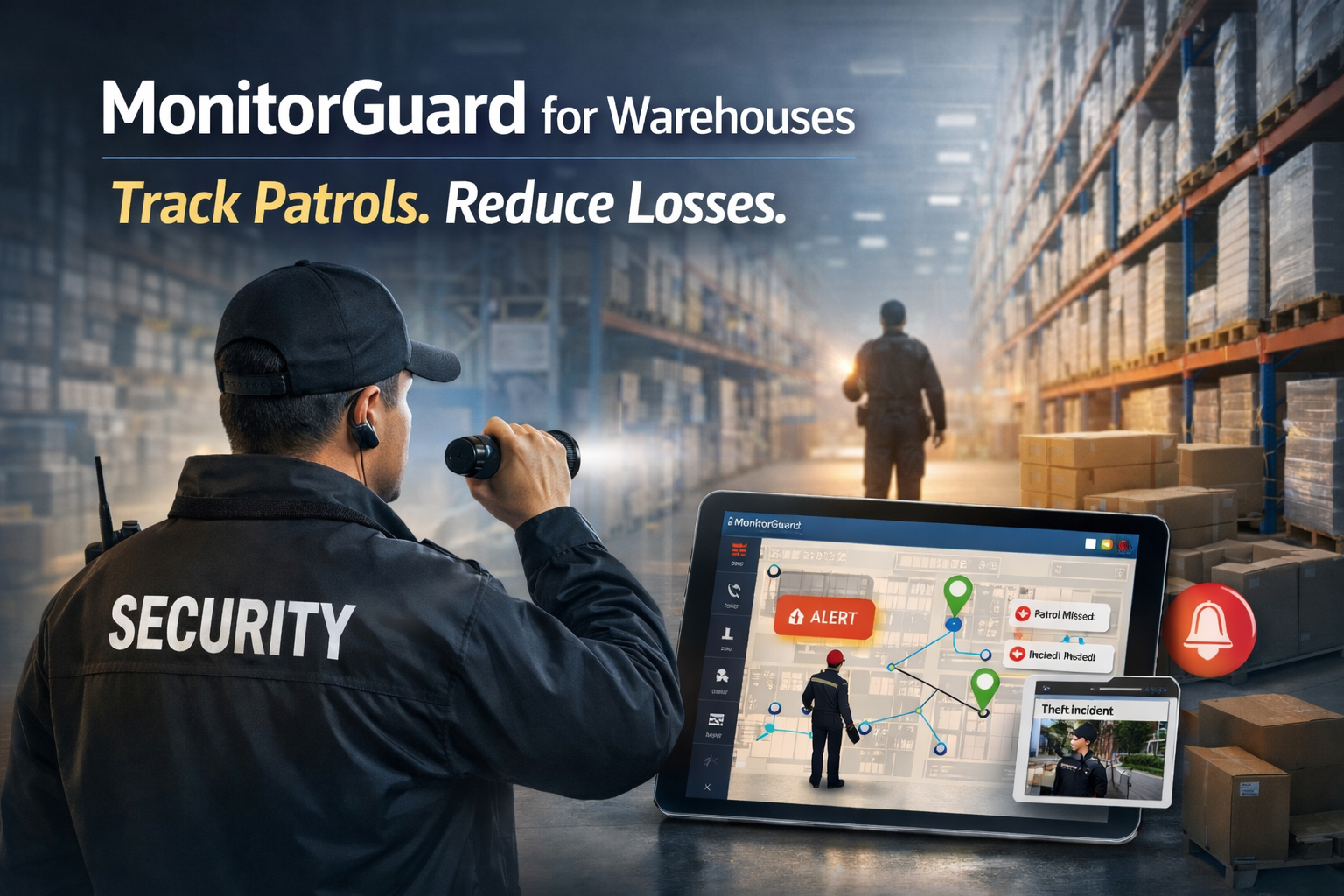
- Digital Patrols: Automated logging ensures every checkpoint is recorded, even when staff is minimal.
- Instant Alerts: Any unusual activity triggers immediate notifications for fast response.
- Centralized Dashboards: Managers can view multiple sites at a glance, making off-hours oversight as effective as daytime supervision.
- Data-Driven Decisions: Historical and real-time data help identify patterns, prevent recurring issues, and optimize security protocols.
- Proactive Risk Management: Small threats are detected before they escalate, ensuring operational continuity.
Final Thoughts
Off-hours operations should never be a source of hidden risk. Silence does not equal safety - it only highlights the importance of visibility, data, and real-time monitoring. By integrating digital patrols, instant alerts, and centralized dashboards, facilities can:
- Detect threats early and respond faster
- Reduce operational and financial risks
- Improve compliance with safety protocols
- Provide managers with peace of mind, knowing every site is monitored effectively
In today’s world, relying on quiet as a measure of security is too risky. Facilities that adopt proactive, data-driven monitoring gain clarity, control, and confidence, even during the most vulnerable off-hours